The Stacked Deck in Texas: Why the Karmelo Anthony Verdict Demands Our AttentionTried as an adult despite a spotless record and a high GPA, a teenager’s swift conviction exposes a system favoring cold efficiency over true justice.
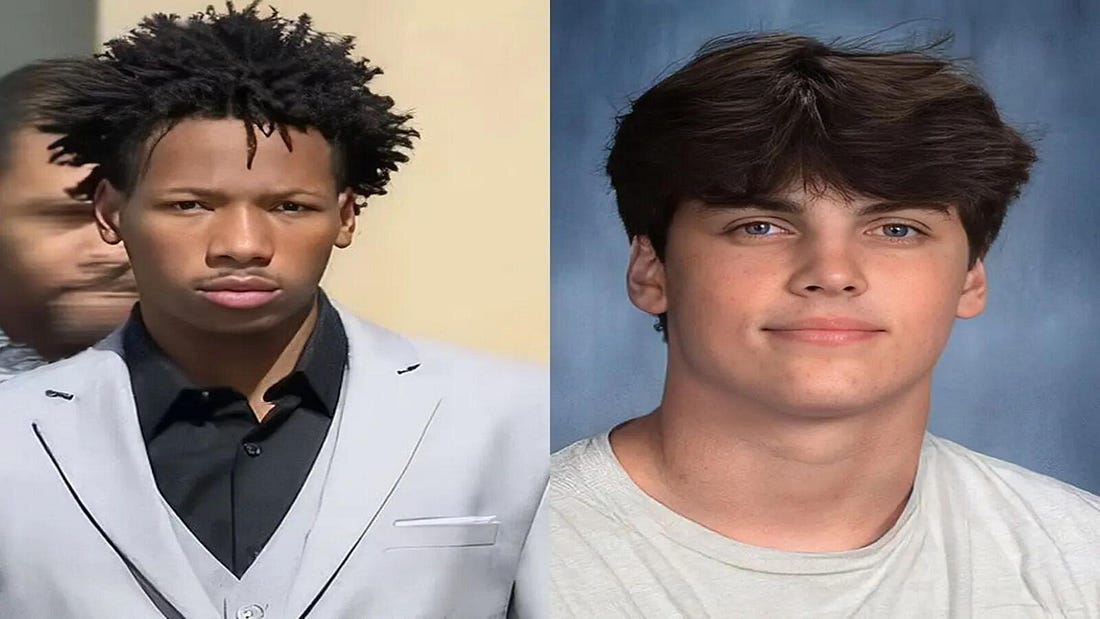
We need to talk about what just happened in a Texas courtroom. On Tuesday, a 19-year-old named Karmelo Anthony was convicted of murder and sentenced to 35 years in prison. It stems from a tragic day in April of last year at a high school track meet in Texas, where an altercation over a tent ended with the fatal stabbing of 17-year-old Austin Metcalf. The prosecution called it a provoked attack; the defense argued it was self-defense against a larger opponent. A young life was lost, and that is a tragedy, period. But how the state of Texas handled the aftermath should make every single one of us pause and ask ourselves: what does justice actually look like in America today? Let’s start with how we treat our youth. Karmelo Anthony was just 17 years old when this incident happened. Seventeen. In most places, that is a child. But because of Texas law, he was immediately thrust into the gears of the adult criminal justice system and tried as a grown man. We tell teenagers they aren’t mature enough to buy a beer, rent a car, or vote, but when the absolute worst happens, we decide they possess the full mental and emotional capacity of a mature adult. By trying him as an adult, the system completely stripped away the context of adolescent brain development and the impulsivity of youth, setting the stage for a maximum sentence that could have put him away for life.
And who was Karmelo Anthony before that fateful day? This wasn’t a kid with a history of violence or deep-seated malice. He had a great GPA. He was a good student with dreams of going to college. He had absolutely zero prior run-ins with the law—no criminal record, no rap sheet, nothing. He was a teenager doing what teenagers do on a rainy spring day, participating in a school sports event. After the jury reached its verdict, his mother stood on that witness stand and begged for mercy, reminding the world that he is a child who is deeply remorseful. But in the eyes of the prosecution and the law, his stellar background and unblemished past were brushed aside as if they didn’t matter at all. Now, we have to talk about the elephant in the room. We have to talk about race, because it is woven into the very fabric of how this trial played out. Karmelo Anthony is Black. Austin Metcalf was white. And when it came time to pick the people who would decide Karmelo’s fate, a highly controversial process unfolded. During jury selection, the prosecution managed to systematically strike every single eligible Black candidate from the panel. The defense raised a Batson challenge, crying foul over racial bias. But the state offered “race-neutral” explanations—noting that some of the Black candidates were educators and wouldn’t be able to shelve their implicit biases—and the judge just nodded and let it happen. The result? The jury had no Black people on it. Let that sink in. In a country that supposedly prides itself on equal justice under the law, a young Black teenager sat at the defense table looking at twelve people who did not share his lived experiences, his background, or his community. This was not a true jury of his peers. The Constitution talks about a fair trial, but how can a trial be fair when the system actively filters out the very people who might understand the nuance of navigating the world in Black skin? It sends a chilling, loud message to Black Americans that when you are on trial, the deck can be stacked against you before the first piece of evidence is even introduced. Then look at the blinding speed at which this jury moved. They deliberated for less than three hours. Think about the weight of what they were deciding. They were holding a teenager’s entire future, the next several decades of a human being’s life, in their hands. A three-hour deliberation for a first-degree murder case involving complex arguments of self-defense and sudden passion is practically a legal blink of an eye. It raises the distinct and deeply unsettling criticism that the jury’s minds were already made up long before they walked into that deliberation room. It felt less like a careful, agonizing weighing of facts and more like a rush to judgment. The system worked exactly how it was designed to work in Collin County, Texas—efficiently, coldly, and swiftly. But efficiency is not the same thing as justice. When you look at the totality of the Karmelo Anthony case, you see a system that refused to see a child, refused to look at a clean record, and refused to allow Black citizens a seat at the table of judgment. It is no wonder that crowds clashed outside the courthouse and that public figures are calling the conviction disgusting. This case has become a flashpoint because it mirrors a historical pattern that America just can’t seem to shake. We have to ask ourselves: what kind of community do we want to live in? If the measure of our justice system is just how fast we can put a young Black man away without a single peer on his jury, then we are failing. Austin Metcalf’s death is an undeniable tragedy, but compounding it with a flawed, racially sterile process isn’t the cure. Yet, despite the heavy 35-year sentence, this story is far from over, and there is a legitimate glimmer of hope found in the American appellate system. Karmelo’s defense team is already preparing a robust appeal, armed with powerful legal grounds to challenge this outcome. They will argue that the systematic removal of Black jurors violated his constitutional rights. Higher courts exist precisely to correct the failures of local courtrooms, meaning this swift verdict is merely the first chapter in an ongoing fight for true, unbiased justice. You're currently a free subscriber to The Don Lemon Show. For the full experience, upgrade your subscription.
|